

Routine Motorcycle Maintenance Checks
Welcome to Baylink Motorcycle Training Centre! I’m Anthony, and today we are going to talk about the routine maintenance checks you should be performing on your motorcycle.
Ideally, you should aim to do these visual checks once a week. However, it is especially important if your motorcycle has been sitting in a garage over the winter months, your bike needs a thorough look-over before you take it out for that first spring ride.
To make it easy, I like to use a systematic approach. Spending just 10 to 15 minutes working your way through these components, checking that your motorbike is in good working order helps to keep you safe on the road.
1. Tyres & Tread
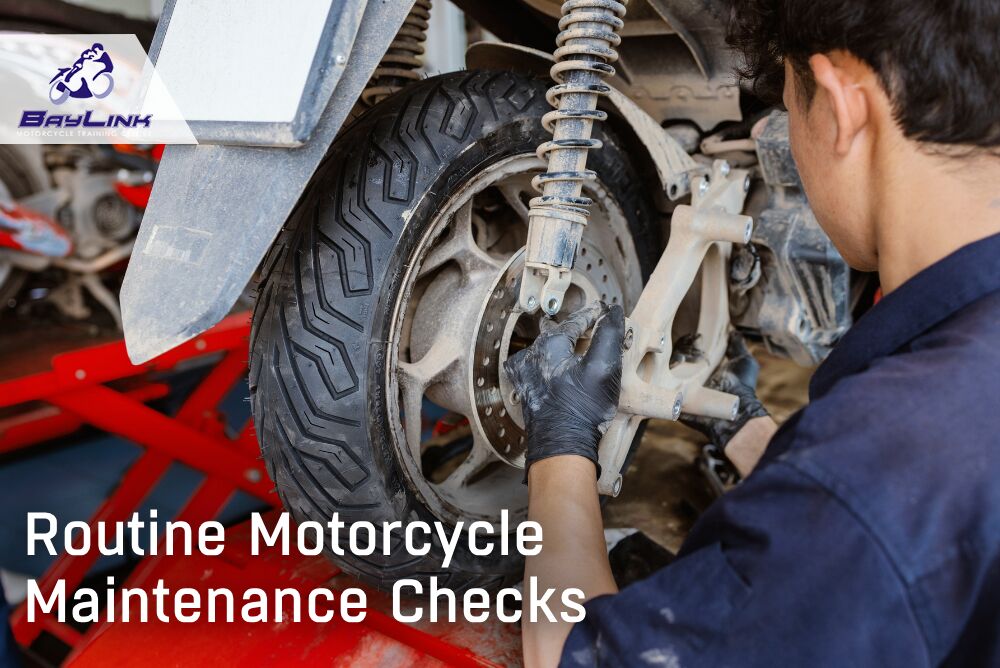
Your tyres are the only thing connecting you to the road, making them your number one priority.
- Tyre Pressures: Tyres naturally lose air over time—especially when sitting idle for two or three months. Check your owner’s manual for the correct pressures and pump them up if needed.
- Tread Depth: Ensure you have plenty of usable tread left.
- Physical Condition: Inspect the sidewalls and tread carefully. Look out for any cracks, cuts, or embedded debris like nails.
2. Brake Pads
You need to know your bike will stop when you want it to.
- Grab a small flashlight and shine it into the inside of your brake calipers against the discs.
- Check the thickness of your brake pads. Ensure there is plenty of “meat” left on the pads and that they aren’t worn down to the metal backing.
3. Chain & Sprockets
A poorly maintained drivetrain ruins your ride quality and can be highly dangerous.
- Tension: Check that your chain is properly tensioned and not hanging too loose.
- Maintenance: Ensure the chain is clean and thoroughly lubricated. A dry, unlubricated chain sounds terrible, accelerates wear, and feels incredibly rough when you’re riding.
4. Oil & Vital Fluids
Think of fluids as the lifeblood of your motorcycle. Because every motorcycle model uses a different inspection method (such as a sight glass or a dipstick), always consult your manual to check your oil correctly. While you are checking the oil, look at your other essential reservoirs:
- Brake Fluid: Check the front brake reservoir up on your handlebars and the rear reservoir by the frame. Ensure the fluid is clean and topped up to the correct level.
- Clutch Fluid: If your motorcycle features a hydraulic clutch, don’t forget to check its fluid level as well.
- Coolant: Make sure there is sufficient coolant in your bike to avoid overheating and engine damage.
5. Electrical Systems
Before you gear up, turn your bike’s ignition on and do a quick lap to make sure you can see and be seen. Test your:
- Headlights (low and high beams)
- Front and rear indicators
- Brake lights (test with both the front lever and rear pedal)
- Horn
Play It Safe: When to See a Professional
These quick checks only take a few minutes, but they give you a fantastic baseline awareness of your motorcycle’s health. With that said, a visual check has its limits.
If you ever spot something concerning, or if you feel unsure about a mechanical component, we always recommend visiting a licensed motorcycle mechanic. Having a professional inspect your bike is the best way to guarantee peace of mind.
Take care of your machine, keep it maintained, and stay safe out on the road!